§ Bear with me. This course landing page is in development. So far three episodes are on release. JLL 12 August 2026
The Fallen Goddess Scenario in 18 Episodes
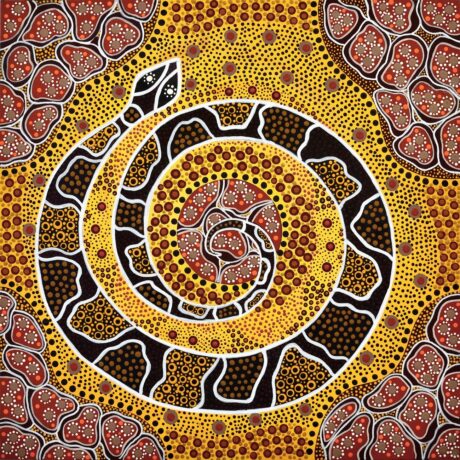
I am Nature, the universal Mother, mistress of all the elements, primordial child of time, sovereign of all things spiritual, queen of the dead, queen also of the immortals, the single manifestation of all the gods and goddesses that are known to you on earth.
Apuleius, The Golden Ass, ca. 150 AD. Cited in Not in His Image, Ch. 8, Inside the Mysteries.
“No true work of art is ever finished, only abandoned at the right moment.”
Rainer Maria Rilke, citing the French sculptor August Rodin
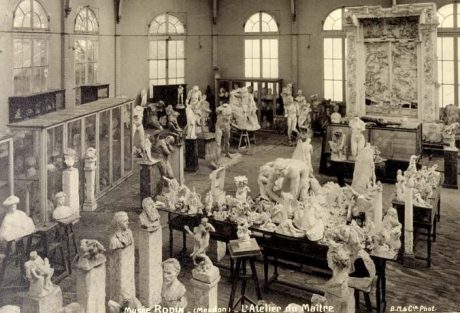
Unfinished works in marble and plaster in Rodin’s studio when he died
SOUNDTRACK in development
Suggested OVERTURE to all episodes: Kayhan Kalhor, Kamancheh Master, Improvisation in Shoushtari.
Narration froom Sophianicmyth with Kamancheh soundtrack:
The most beautiful story on earth is the story about the earth, the sentient and intelligent mother planet. It can be called a vision story, not to be mistaken for a fantasy trip or a grandiose game of pretending. In fact, the Home Story totally demolishes the narcissistic claim that we are gods. Sophianic myth is light-years beyond New Age make-believe and is, in fact, the perfect antidote to it. The Home Story is a “meta-narrative” that you test and verify at every point of engagement with it.
There is some talk today about the need for a meta-narrative to unite good and honest folks in all lands who want to see the world turn for the better, and wish to be instrumental in that shift. The meta-narrative does exist, and must not be taken on authority. You can only believe the life-story of the World Mother to the extent that you live it for real. Those today who see the need for a meta-narrative face a dilemma. Would they be able to recognize it when presented to them? Perhaps they think they can construct a meta-narrative, a new myth. Good luck on that.
Comparative mythology is the comprehensive study of topics, themes, and characters found in the myths of all cultures over time. Without extensive skill in this genre, it is impossible to compare the FGS to other myths and determine its unique and outstanding properties. In short, it’s a professional call. Not to be taken on faith, however. Only in the perspective of comparative mythology do the exceptional features of the FGS become obvious. But once that observation has been made, the truth is there to see, independent of expertise. Verification of the myth depends entirely on first-person participation, living in the narrative. Certainly, the myth is complex and requires patience and intellectual determination to master. To put into practice the Sophianic myth relies on basic intelligence, but it also sharpens, enhances, and amplifies the mental effort brought to it. The dubious presumption of IQ is not an issue here. Participation relies merely on the will to learn.
What, finally, would attract anyone to become involved with this elaborate mythic narrative? Those who seek purpose in life will find both the frame and foundation for it in this visionary tale. That already is a huge factor of attraction, and there is more as well.
Gnostics taught that Sophia was compelled by overwhelming desire to plunge into the experiment conducted with the species-singularity she herself had designed, acting in the galactic core, the Pleroma. Participation in the Home Story begins with a natural feeling of empathy for the Aeon, your divine mother. In that empathy, you can realize how a superhuman divinity can be sentient like yourself, subject to emotions of joy, daring, terror, pleasure, confusion, grief — as the narrative fully describes. That being so, you can no longer think of the earth as a gigantic rock floating in a cosmic void. No, Sophia is alive, intelligent, emotively responsive, self-conscious of her planetary body, and co-active with all that lives, especially with human animals.
The Sophianic myth has many dimensions of meaning and applications to life. The summation of Sophia’s myth converges and dwells on a point of esthetics: as nature is beautiful, so is the supernatural source of the natural world. But infinitely, inconceivably more so. The natural world is lovely and bountiful in countless ways, Likewise, the World Mother, the dreaming goddess at its source, but infinitely more so. Coming into Sophia’s immediate presence learning the spectacular star myth about her, you will realize that this particular cosmic divinity is all about esthetics.
The most beautiful story on earth is the story about the earth. Finally, or perhaps from the outset, there is one paramount factor that brings you home to the Home Story, and compels you to get involved and do your part to determine its outcome: that factor is beauty.
FGS 1.18 Final Iteration: Course Curriculum
- I THE HUMAN SINGULARITY
- FGS 1.18 Episode One: Once Upon A Tremor
- FGS 1.18 Episode TWO: Divine Parents
- FGS 1.18 THREE: Protection and Projection
- II A COSMIC ANOMALY
- Private: FGS 1.18 FOUR: Unilateral Dreaming
- Private: FGS 1.18 Five: The Luminous Plume
- Private: FGS 1.18 Six: Impact zone
- III In the Galactic Arm
- Private: FGS 1.18 Seven: The Saturn Cosmos
- Private: FGS 1.18 Eight: The Nest of the Stork
- Private: FGS 1.18 Nine: Savitri’s Gift
- IV The Luminous Child
- Private: FGS 1.18 Ten: Enter the Drakon
- Private: FGS 1.18 Eleven: Divine Defiance
- Private: FGS 1.18 Twelve: Daughter Cell
- IV THE PASSAGE TOWARD ORION
- Private: FGS 1.18 Thirteen: The Spin of Sirius
- Private: FGS 1.18 Fourteen: The Gender Rift
- Private: FGS 1.18 Fifteen: Archontic Ordeal
- V THE ARK OF LIFE
- Private: FGS 1.18 Sixteen: The Dreaming Planet
- Private: FGS 1.18 Seventeen: The Coming of the Symbiont
- Private: FGS 1.18 Eighteen: This Divine Experiment
- V To Orion and Back